How to Draw a Fast Cartoon Hyena in 6 Easy Steps (Interactive Draw-Along)
Learn how to draw a cartoon hyena in six clear stages. Spotted hyenas have a distinct silhouette with high shoulders, a sloping backline, and a thick neck. Their wide jaws and rounded ears give them plenty of personality on the page. This tutorial uses simple oval armatures and loose gesture lines to build the character from scratch.
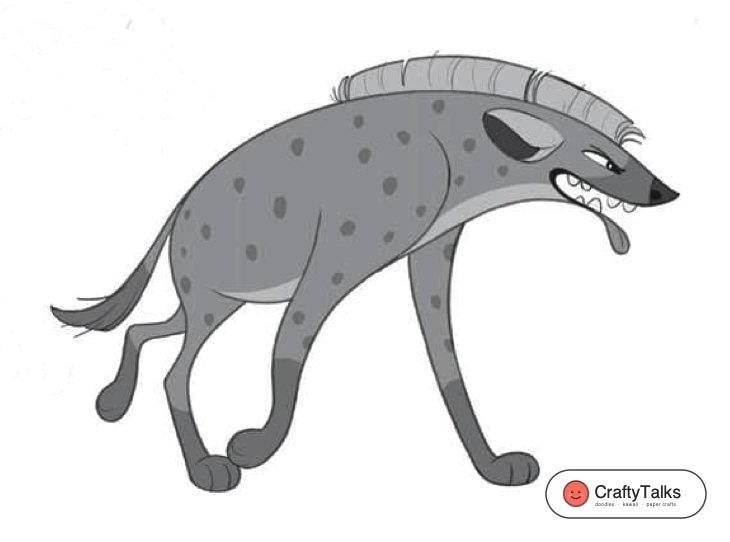
Interactive Draw-Along Studio: Cartoon Hyena Edition
Practice the steps directly in your browser with our digital drawing studio. Turn on trace guidelines, test out earth tone palettes, and export your artwork when finished.
Key Anatomy Points for Drawing Hyenas
Spotted hyenas look quite different from wolves and domestic dogs. Keeping these structural traits in mind will help your sketch look convincing:
- Sloping Backline: The front legs and shoulders sit noticeably higher than the pelvis, giving the back its steep downward slope.
- Heavy Neck and Cranium: Hyenas carry powerful jaw muscles. The neck line curves upward from the shoulder into a wide, wedge-shaped head.
- Rounded Bear-Like Ears: Unlike the pointed triangular ears on jackals or foxes, spotted hyenas have broad, circular ears with dark outer rims.
- Four-Toed Paws: Hyenas walk on four digits on each foot, with short, blunt claws that do not retract.
Recommended Drawing Materials
- Sketching Pencil: An HB or 2B pencil works well for light construction shapes.
- Eraser: A kneaded eraser removes guidelines without tearing the paper surface.
- Fineliner Pen: A 0.3mm or 0.5mm black pigment liner gives clean final contours.
- Coloring Markers: Cool grays, slate tones, and a soft coral pink for the tongue.
Step-by-Step Cartoon Hyena Drawing Tutorial
Step 1: Sloping Torso Oval & Muzzle Wedge
Start with light pencil pressure. Draw a large tilted oval for the main torso. From the upper right edge of the oval, extend an arched neck line forward. Curve it down into an open wedge for the upper and lower jaws.
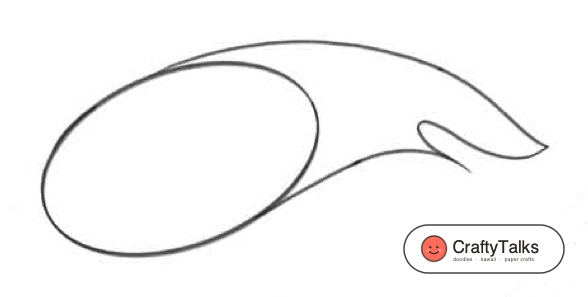
Artist Tip: Angle the torso oval downward toward the left. This tilt sets up the sloping back posture before you add any limbs.
Step 2: Limb Gestures, Tongue & Eye Slit
Drop two long, straight lines down from the front of the body for the forelegs. Draw angled lines for the shorter hind legs, with the hock joint pointing backward. Add a curved tail line at the rear, a narrow eye slit, and a tongue hanging from the open mouth.
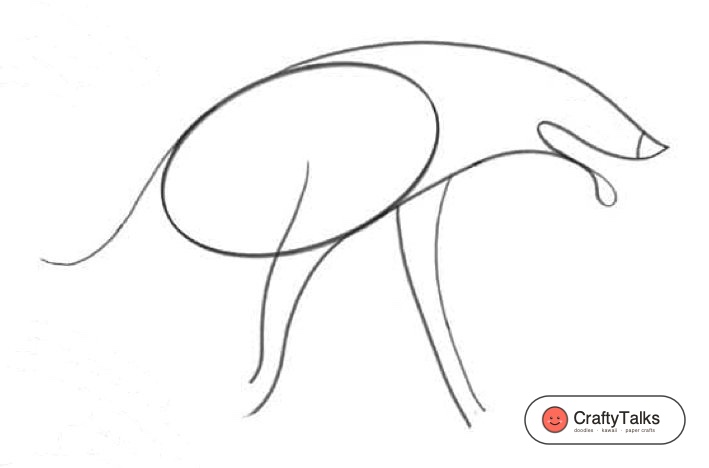
Artist Tip: Keep the front leg lines longer than the back leg lines to emphasize the hyena’s low-slung rear.
Step 3: Bristled Back Mane Crest
Sketch a sweeping arc over the neck and upper back to establish the mane crest. Thicken the legs by adding parallel contour lines along the front and back of each limb. Outline the belly line curving upward into the flank.
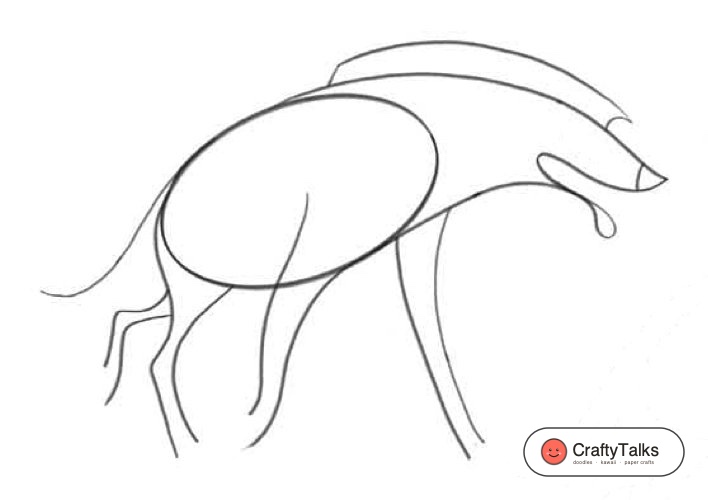
Artist Tip: The mane line follows the arch of the neck and tapers off as it reaches the middle of the back.
Step 4: Rounded Ear, Paws & Sharp Teeth
Draw a broad, rounded ear at the base of the skull. Add circular paw pads at the bottom of each foot. Sketch small triangular teeth along the jawline, a pointed nose tip, and fluffy hair tufts along the tail.
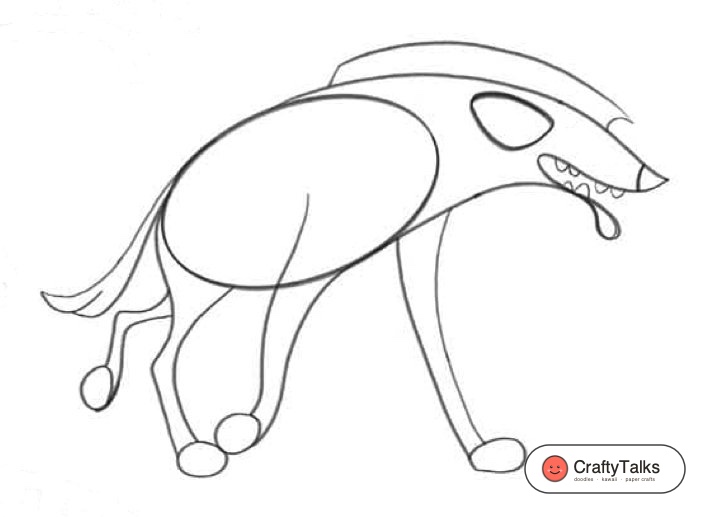
Artist Tip: Make the ear outline rounded rather than pointed. An egg-shaped oval captures the spotted hyena’s ear shape accurately.
Step 5: Clean Ink Contours & Mane Ridges
Switch to your fineliner pen. Trace over your best pencil lines, turning the mane guide into individual vertical bristle segments. Add small claws to the toes and outline the dark eye mask.
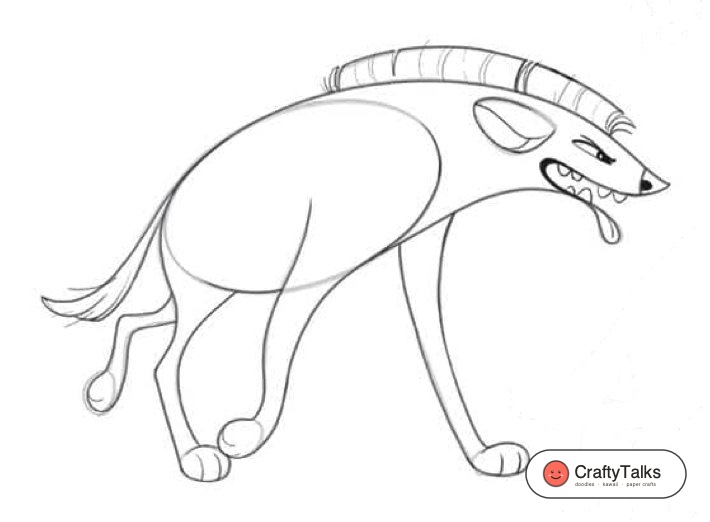
Artist Tip: Let your ink dry completely before erasing the pencil guidelines underneath.
Step 6: Spotted Coat & Tonal Shading
Color the muzzle, outer ear rims, and lower paws with dark gray or black. Shade the main coat with a medium slate gray. Scatter irregular oval spots along the flank, belly, and hindquarters, then color the tongue with soft coral pink.
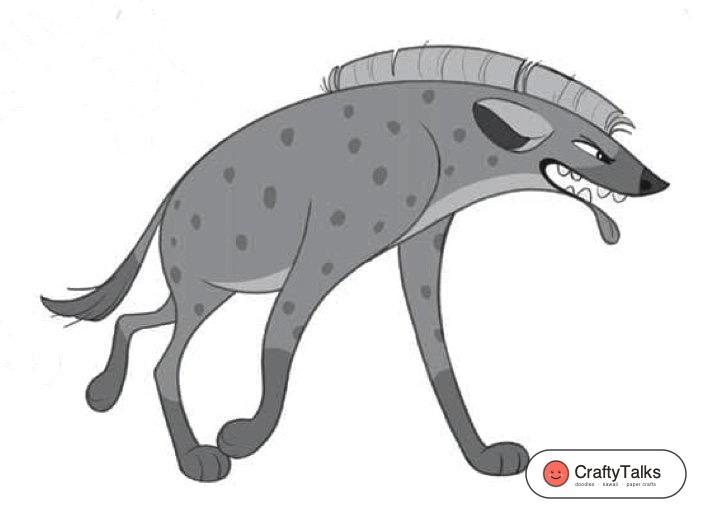
Artist Tip: Vary the spot sizes. Smaller dots look natural near the legs and spine, while broader spots fit the ribcage and hips.
Color Palette for Cartoon Hyena Sketches
Here are the core hex colors used in the finished illustration:
- Dusty Slate Gray (#78716C): Main body coat, shoulders, and muscular flank.
- Deep Espresso Char (#44403C): Coat spots, tail tip, and lower leg stockings.
- Weathered Ash Stone (#A8A29E): Bristled back mane and chest highlights.
- Charcoal Black (#1C1917): Snout mask, nose leather, and outer ear borders.
- Coral Pink (#F43F5E): Tongue and inner mouth.
Explore More Wildlife Drawing Tutorials
Expand your sketchbook with these step-by-step animal guides:
- How to Draw a Fast Cartoon African Wild Dog: Learn the painted coat patterns and bat-like dish ears of Africa’s hunting hound.
- How to Draw a Fast Cartoon Cheetah: Sketch a leaping savanna predator with aerodynamic running anatomy.
- How to Draw a Cartoon Lion: Master the flowing mane and regal posture of the savanna pride leader.
Frequently Asked Questions
What makes a hyena drawing look different from a dog?
The primary difference lies in the shoulder height and spine slope. Domestic dogs generally have a level back, while hyenas carry high shoulders and low hindquarters. Hyenas also have much thicker necks and rounded ears.
How do I draw the spots so they look natural?
Avoid placing spots in rigid rows or uniform grids. Real hyena spots are irregular patches scattered across the midsection. Keep them concentrated along the flank and upper thighs, leaving the chest and throat clear.
Can I draw a hyena with colored pencils instead of markers?
Yes. Colored pencils allow you to layer light warm grays first, then build up darker brown and charcoal tones for the spots and muzzle. Use light circular strokes to keep the pencil texture smooth.