How to Draw a Fast Cartoon African Wild Dog in 6 Easy Steps (Interactive Draw-Along)
Discover how to draw a fast cartoon African wild dog in 6 simple, step-by-step stages! Also celebrated as the painted wolf or cape hunting dog, this remarkable savanna predator is famous for its massive bat-like dish ears, playful pack energy, and mottled calico coat. Whether you are filling your animal sketchbook or looking for a fun beginner drawing project, this step-by-step guide breaks down complex canine anatomy into easy geometric shapes and dynamic gesture lines.
Interactive Draw-Along Studio: African Wild Dog Edition
Practice right in your browser with our interactive digital drawing studio! Trace each construction step, toggle guideline layers, test vibrant savanna color palettes, and download your finished high-resolution sketch when ready.
 Step Guide 🔍
Loading Step...
Loading instructions...


Switch to Another Animal
Pick any animal below to start a new step-by-step draw-along!
Step Guide

🎉 High Five, Artist!
Your custom animal illustration is ready to download and share!

African Wild Dog Anatomy & Gesture Secrets for Artists
Unlike domestic dogs or heavy wolves, African wild dogs (Lycaon pictus) are engineered for supreme endurance over sweeping plains. Keep these three anatomical hallmarks in mind while sketching:
- Oversized Bat-Like Radar Ears: Wild dogs have broad, rounded oval ears with dish-like concave curves that dissipate body heat under the hot African sun and pick up subtle pack chatter miles away.
- Four-Toed Digitigrade Running Stride: Unlike other canids that possess five toes on their front paws, wild dogs lack a dewclaw and run entirely on four digits, giving their forelegs an ultra-lean, athletic silhouette.
- The White Tail “Follow-Me” Beacon: Pack members constantly communicate in tall grassland using the bright white fluffy tip of their tail as a visual flag during high-speed dawn and dusk hunts.
Step-by-Step Cartoon African Wild Dog Drawing Tutorial
Step 1: The Head Circle & Bat-Like Dish Ears
Begin with light pencil strokes. Draw a clean circle for the cranial vault near the top-left of your paper. Attach a rounded lower jaw curve, then crown the skull with two broad, oval bat-like ears that spread slightly outward like satellite dishes.

Step 2: Arched Neck & Flowing Torso Armature
From behind the ears, extend a proud arched neck line that swoops down into a lively curved spine. Draw the chest mass dropping forward and taper the belly line up into an aerodynamic, athletic waist.
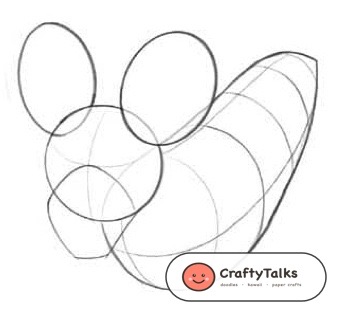
Step 3: Muzzle Circle & Galloping Foreleg Armatures
Block in a rounded muzzle circle over the front jaw. Sketch the shoulder socket and project two forward-reaching front limbs with small circular wrist joints, establishing the animated galloping stride of an active wild dog.
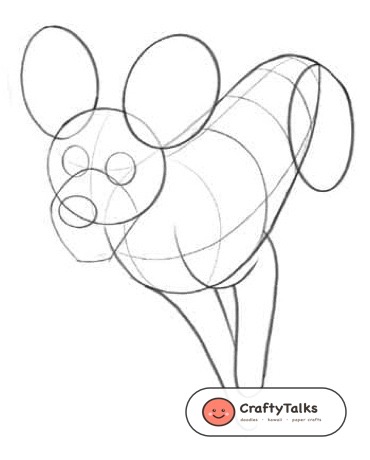
Step 4: Expressive Eyes, Open Jaw & Hind Legs
Add cheerful oval eyes with round pupils and a friendly smile along the open jaw. Outline the inner ear dishes to create depth, and sketch the angular rear thigh, hock joints, and paws planted firmly in a sprint.
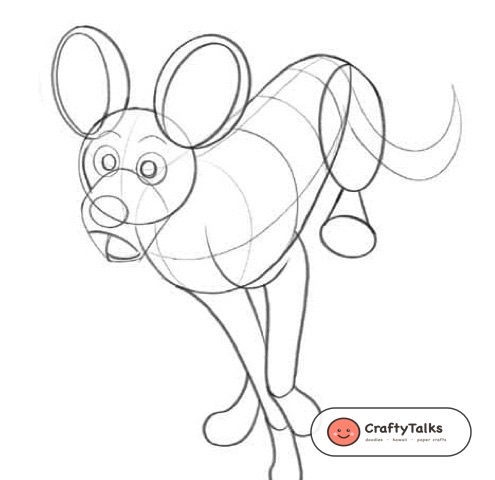
Step 5: Defined Contours, Tail & Calico Patch Armature
With a clean fine-liner pen, ink over your favorite gesture lines to create a solid, continuous outline. Draw the jaunty curved tail with its bushy silhouette, and map out wavy boundary lines for the signature calico fur patches across the torso and legs.
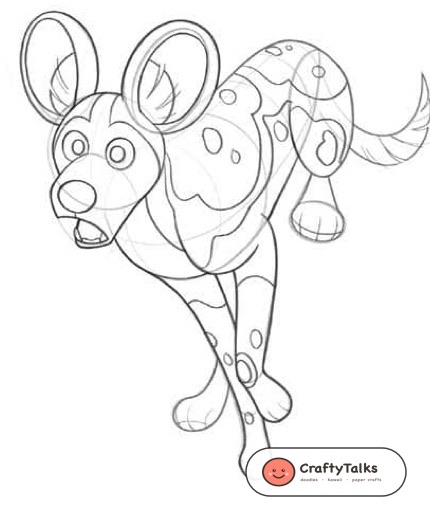
Step 6: Mottled Painted Wolf Coat & Dark Mask
Bring your wild dog alive with authentic coloring! Fill the muzzle and dark facial mask with charcoal tones, darken the outer rims of the ears, and color the body patches in warm ochre, tawny gold, and crisp ivory white. Remember to leave the fluffy tail tip bright white!
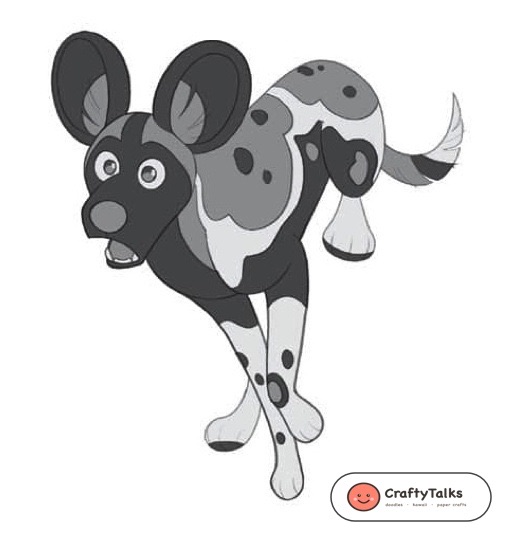
Savanna Palette & Calico Shading Guide
To replicate the authentic painted wolf look with colored pencils, markers, or watercolors, blend these essential tones:
- Charcoal Black: Facial muzzle mask, eye rims, and random body patch borders.
- Tawny Ochre & Golden Brown: Base coat covering the crown, back, and muscular legs.
- Ivory Cream & Pure White: Tail tip flag, throat, chest, and scattered flank mottling.
- Earthy Umber: Soft underbelly and inner limb shadow depth.
Save to Pinterest & Share Your Wild Dog Sketch!
Pin this tutorial to your animal drawing board or sketchbook inspiration collection so you can draw along whenever you want!