How to Draw a Cute Cartoon African Elephant in 6 Easy Steps (Interactive Draw-Along)
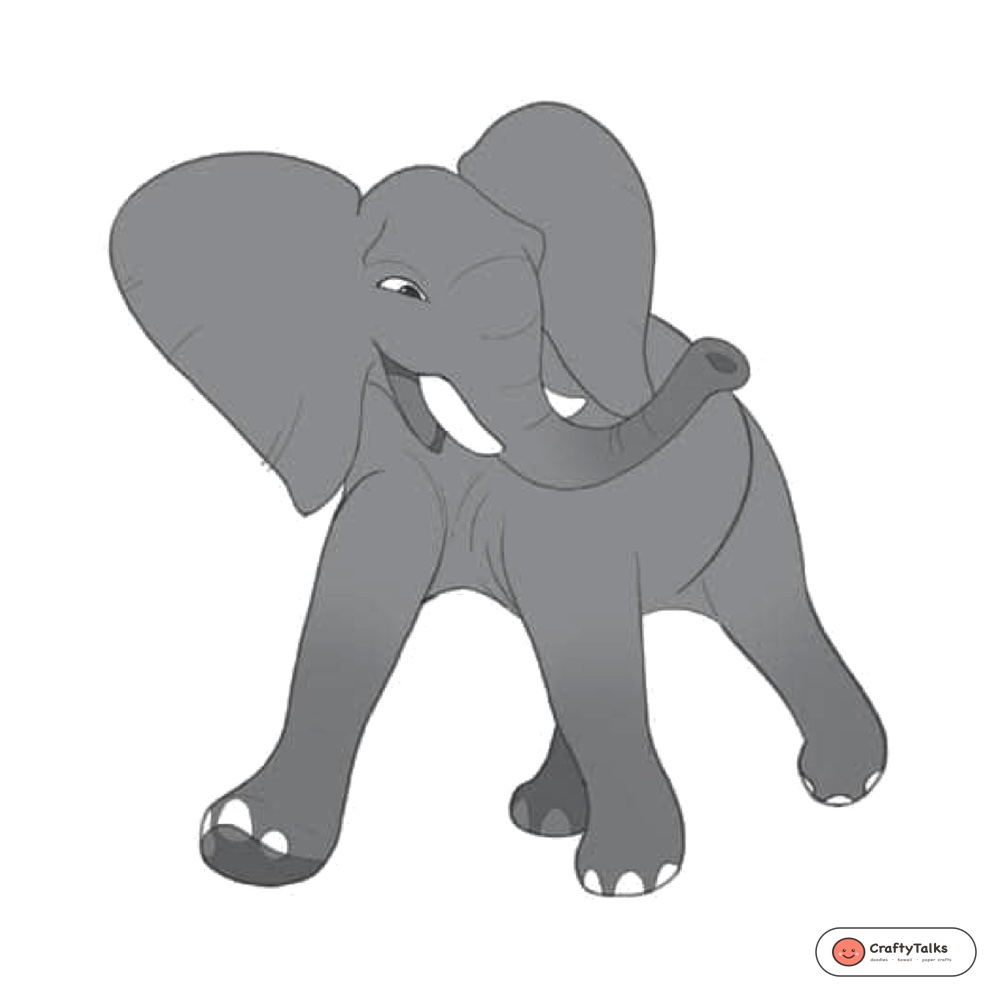
Learn how to draw a cartoon African elephant with wide fan ears, sturdy legs, and a curved trunk in six simple steps. African elephants are famous for their massive ears and arched backs, making their profile recognizable on paper. By breaking the heavy torso into a rounded oval and head circle, you can build a solid cartoon animal illustration with ease.
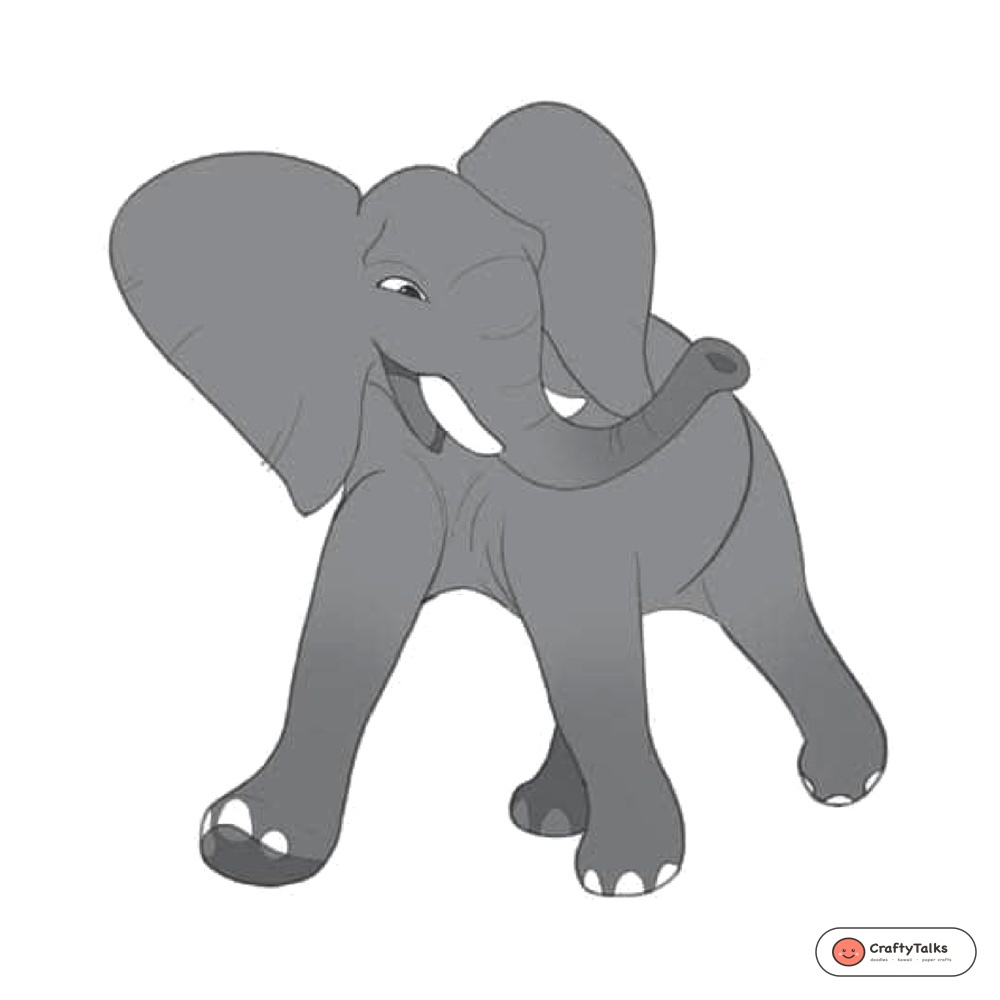
Interactive Draw-Along Studio: Cartoon African Elephant
Practice each stage directly in your browser with our free drawing canvas. You can toggle the step-by-step trace guide, test slate and ivory colors, and download your finished sketch.
 Step Guide 🔍
Loading Step...
Loading instructions...


Switch to Another Animal
Pick any animal below to start a new step-by-step draw-along!
Step Guide

🎉 High Five, Artist!
Your custom animal illustration is ready to download and share!

African Elephant Shapes and Silhouette Proportions
Focusing on these key anatomical traits helps your cartoon elephant look distinct and balanced:
- The torso oval should be large and rounded, sitting slightly higher than the head circle.
- African elephant ears are noticeably larger than Asian elephant ears, extending out in wide fan shapes on both sides of the head.
- Four thick, straight legs anchor the body to the ground like sturdy columns.
- The trunk curves down from between the eyes, framed by two gently upward-curving ivory tusks.
Recommended Drawing Materials
You can complete this drawing tutorial with basic sketchbook supplies:
- An HB graphite pencil for light construction ovals.
- A soft vinyl eraser to remove initial guidelines after inking.
- A 0.3mm or 0.5mm waterproof black fineliner pen for clean contour lines.
- Neutral gray markers or colored pencils for hide shading and tusk highlights.
Step-by-Step Cartoon African Elephant Tutorial
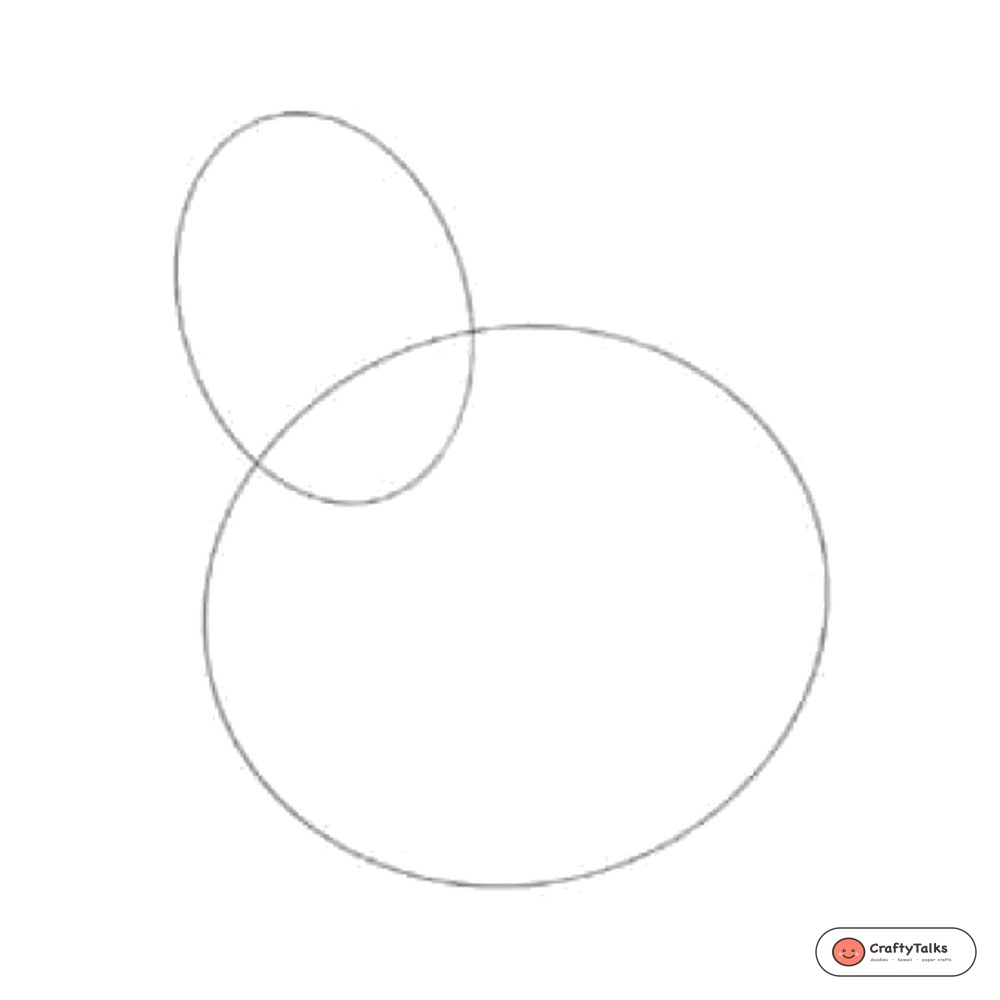
Step 1: Sketch the Head and Body Base Circles
Draw a large egg-shaped oval across the left side of your page to form the torso. On the right side, draw a smaller circle for the head, positioning it slightly lower than the top spine line.
Step 2: Draw the Fan Ears and Curved Trunk
Extend a long, curved trunk downward from the front of the face, curling the tip up slightly. Add two broad fan-shaped ears flanking the head circle, giving them rounded outer edges that flare outward.
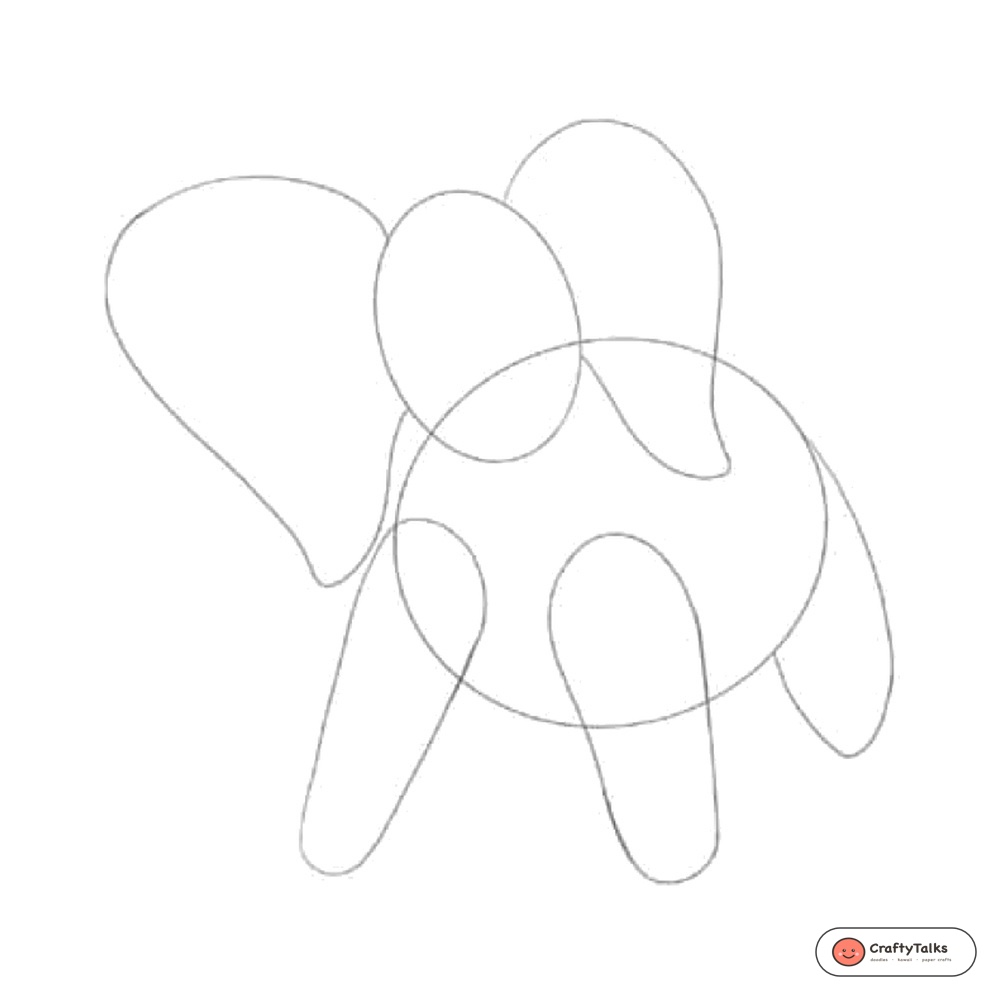
Step 3: Sketch Four Columnar Legs
Drop four thick, straight legs down from the body oval. Keep the feet wide and flat at the bottom so the animal rests solidly on the ground.
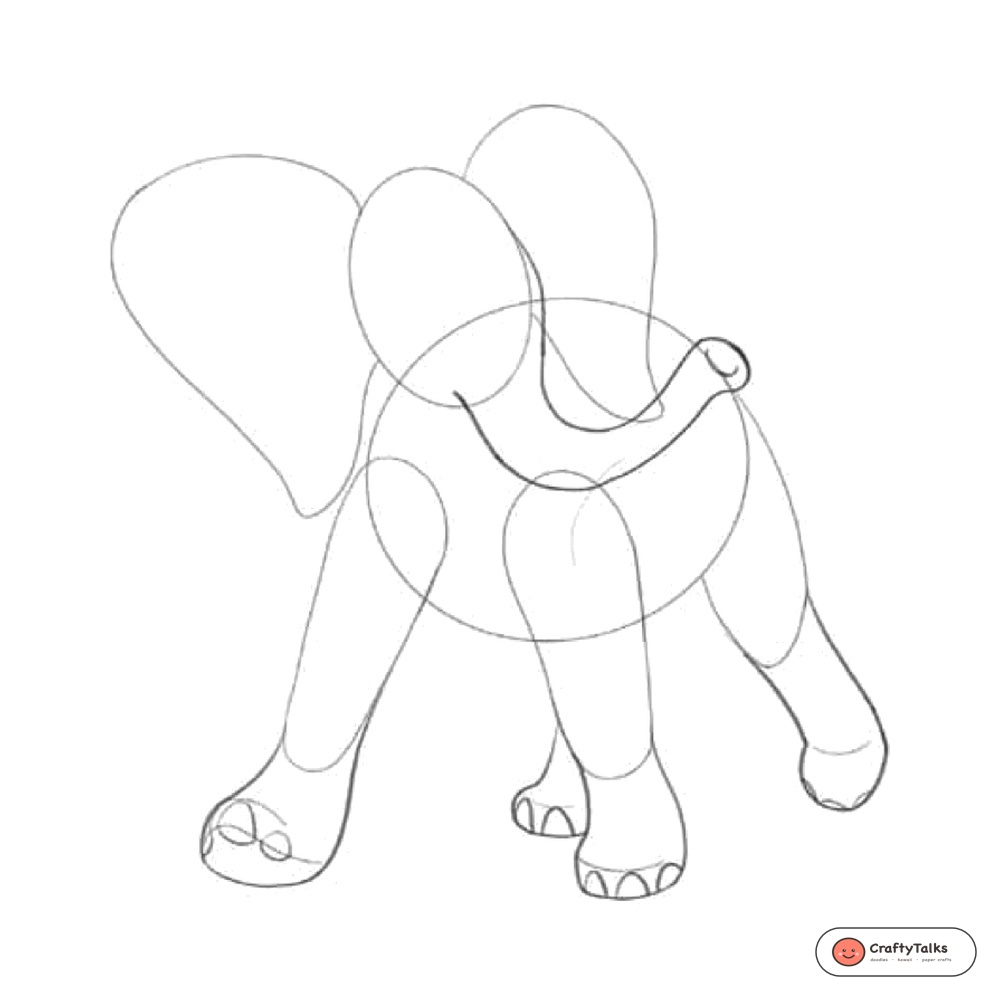
Step 4: Add Tusks, Tail, and Rounded Toes
Draw two pointed ivory tusks on either side of the trunk base, curving their tips slightly forward. Add three small semicircular hoof lines along the bottom of each foot, and sketch a thin tail with a hair tuft at the rear hip.
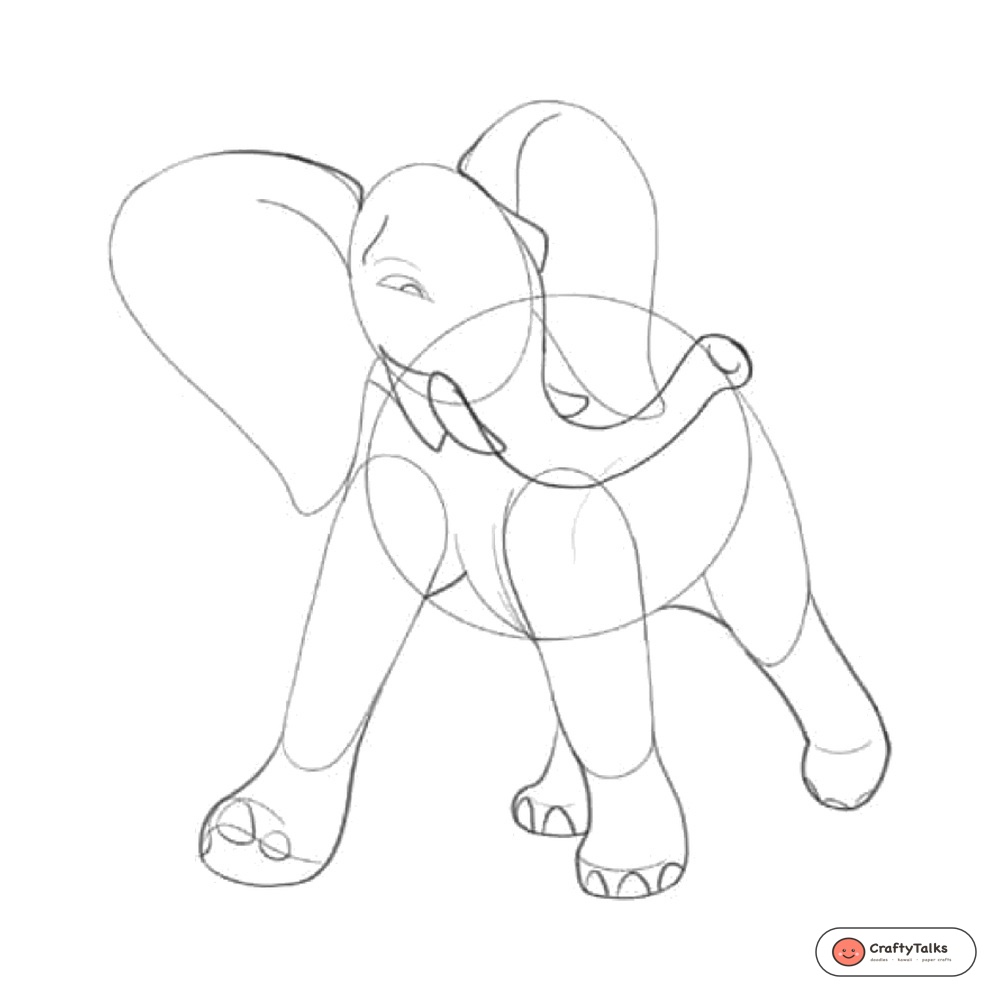
Step 5: Add Facial Details and Skin Creases
Draw a friendly round eye dot with a small smile line beneath the ear flap. Add short horizontal crease marks along the bend of the trunk and curved skin folds over the knee joints to suggest thick hide texture.
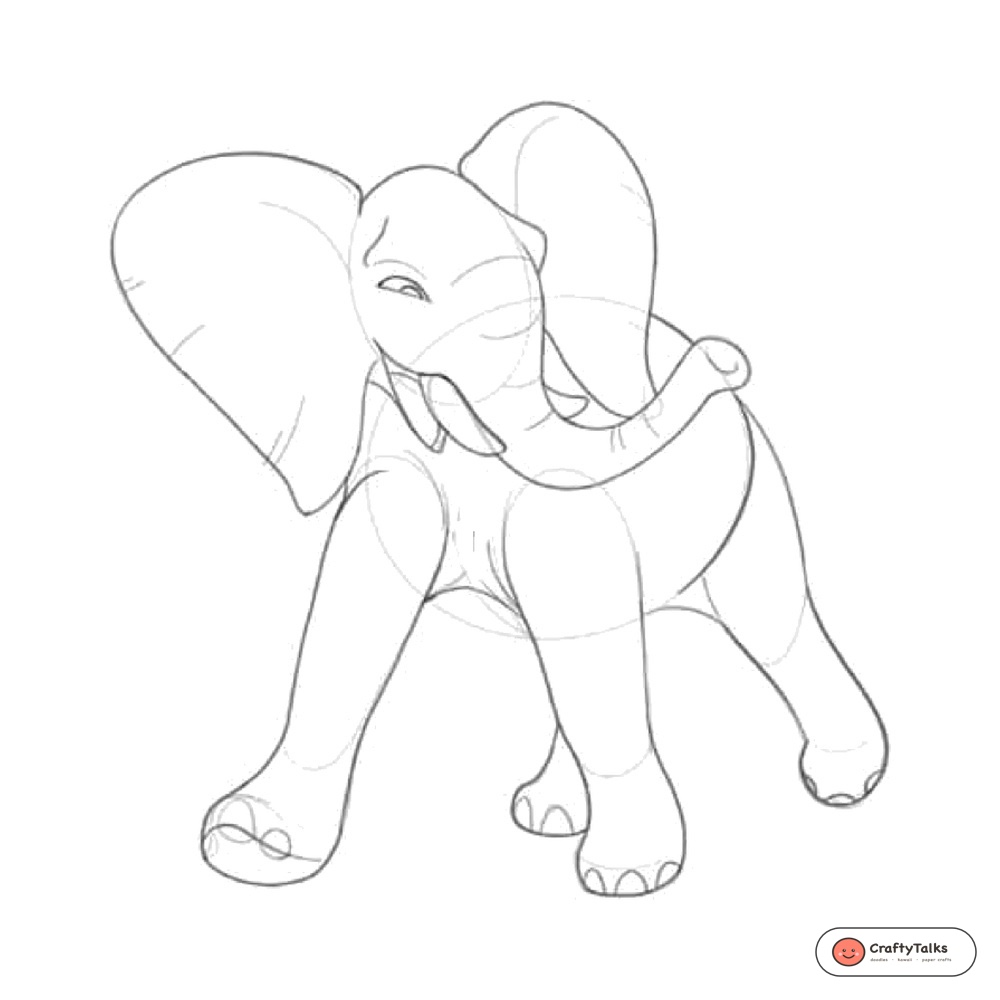
Step 6: Ink Contours and Shade in Slate Gray
Outline your final drawing with dark fineliner ink and erase the initial pencil guidelines. Color the hide in neutral slate gray tones, tint the tusks in soft ivory cream, and shade beneath the belly and behind the ears for subtle depth.
More Savannah Animal Tutorials to Practice
Continue exploring wildlife drawing with our step-by-step guides for a cartoon rhinoceros, a sleeping cartoon hippopotamus, a spotted cartoon hyena, or an agile African cheetah. You can also practice our magic shapes method to build other animal poses from basic geometric outlines.
Frequently Asked Questions
How can I tell African elephants apart from Asian elephants in drawings?
African elephants have much larger fan-shaped ears that reach above the neck line and both males and females typically display prominent tusks. Asian elephants have smaller rounded ears and a more arched back.
What if the trunk looks too stiff?
Draw the trunk with a gentle continuous C-curve or S-curve, and taper it slightly toward the tip. Adding three or four horizontal wrinkle lines along the bend softens the shape immediately.
What colors work best for cartoon elephants?
Neutral cool gray, warm pebble gray, or slate blue markers all produce pleasing storybook finishes. Leaving the tusks and toenails a soft cream color creates clean contrast against the darker skin.