How to Draw a Cute Cartoon Red Panda in 6 Easy Steps (Interactive Draw-Along)
Learn how to draw a cartoon red panda in six simple stages. Red pandas have an unmistakable silhouette with a compact head, wide triangular ears, a curved spine, and a bushy ringed tail. This beginner-friendly drawing guide breaks the animal down into simple pencil armature circles and clean contour lines that anyone can follow.
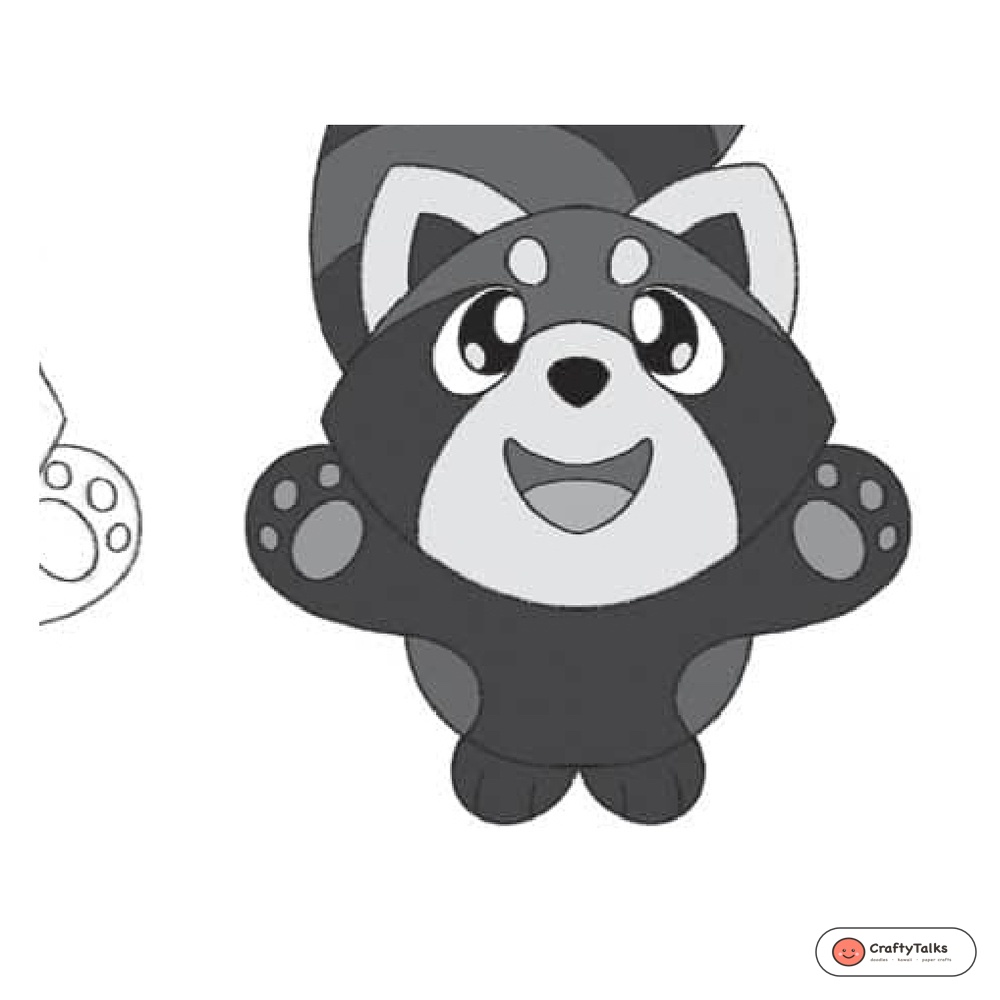
Interactive Draw-Along Studio: Cartoon Red Panda Edition
Practice the steps directly in your browser with our free interactive drawing canvas. Toggle step guides, trace construction lines, test color palettes, and download your finished drawing.
 Step Guide 🔍
Loading Step...
Loading instructions...


Switch to Another Animal
Pick any animal below to start a new step-by-step draw-along!
Step Guide

🎉 High Five, Artist!
Your custom animal illustration is ready to download and share!

Anatomy Guide for Drawing Cartoon Red Pandas
While giant pandas have heavy bodies and rounded black ears, red pandas look much more like raccoons and foxes. Keeping these distinctive body traits in mind will help your sketch look recognizable right away:
- Wide, Rounded Triangular Ears: Red panda ears are broad at the base with soft, rounded tips and thick tufts of white inner ear fur.
- Plump, Compact Torso: The spine arches smoothly from the shoulders down to the hips, giving the animal a low-slung, cuddly posture.
- Thick Bushy Tail: The ringed tail is nearly as long as the entire body and acts as a counterbalance when balancing on tree limbs.
- Sturdy Paws and Dark Limbs: Red pandas have short, strong forelegs adapted for climbing bamboo stalks, usually colored in dark espresso or charcoal tones.
Recommended Drawing Materials
You can complete this drawing using standard pencil and paper or your favorite digital drawing app:
- Sketching Pencil: An HB or 2B pencil for laying down light structural circles.
- Eraser: A soft vinyl or kneaded eraser to clean up inner construction guidelines before inking.
- Fineliner Inking Pen: A 0.3mm or 0.5mm black pigment pen for clean final outlines.
- Coloring Markers or Pencils: Warm terracotta or rust red for the coat, dark espresso brown for the paws, cream for the muzzle, and soft pink for the cheeks.
Step-by-Step Cartoon Red Panda Drawing Tutorial
Step 1: Head Circle and Triangular Ear Wedges
Start by drawing a clean circle in the upper portion of your page for the skull. On top of the head circle, add two broad, rounded triangular shapes angled outward for the ears. Keep your pencil strokes light because these shapes serve as the foundation for the facial details later.
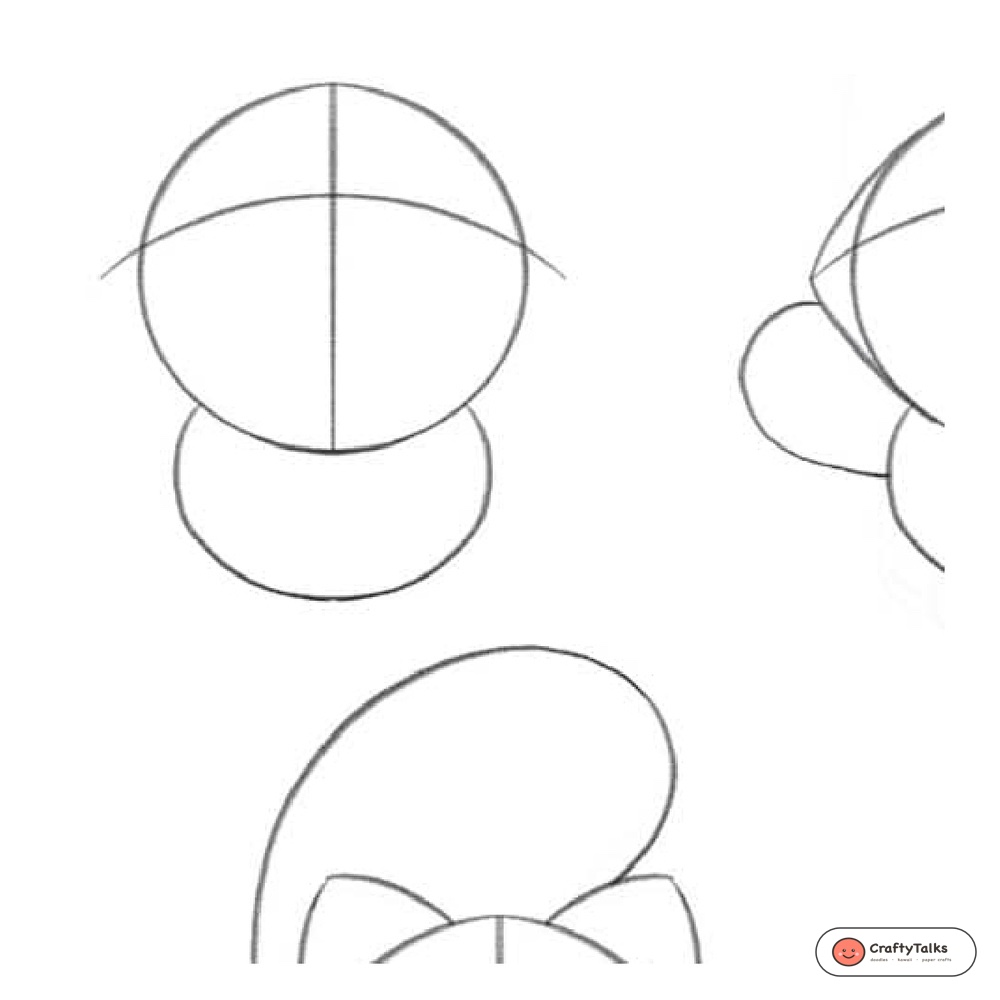
Step 2: Neck Curve and Sloping Backline
From the back of the head, draw a smooth arched line sloping downward to establish the back of the neck and spine. Curve the lower line downward from the jaw to form the chest. This compact curved spine sets the playful resting pose of the red panda.
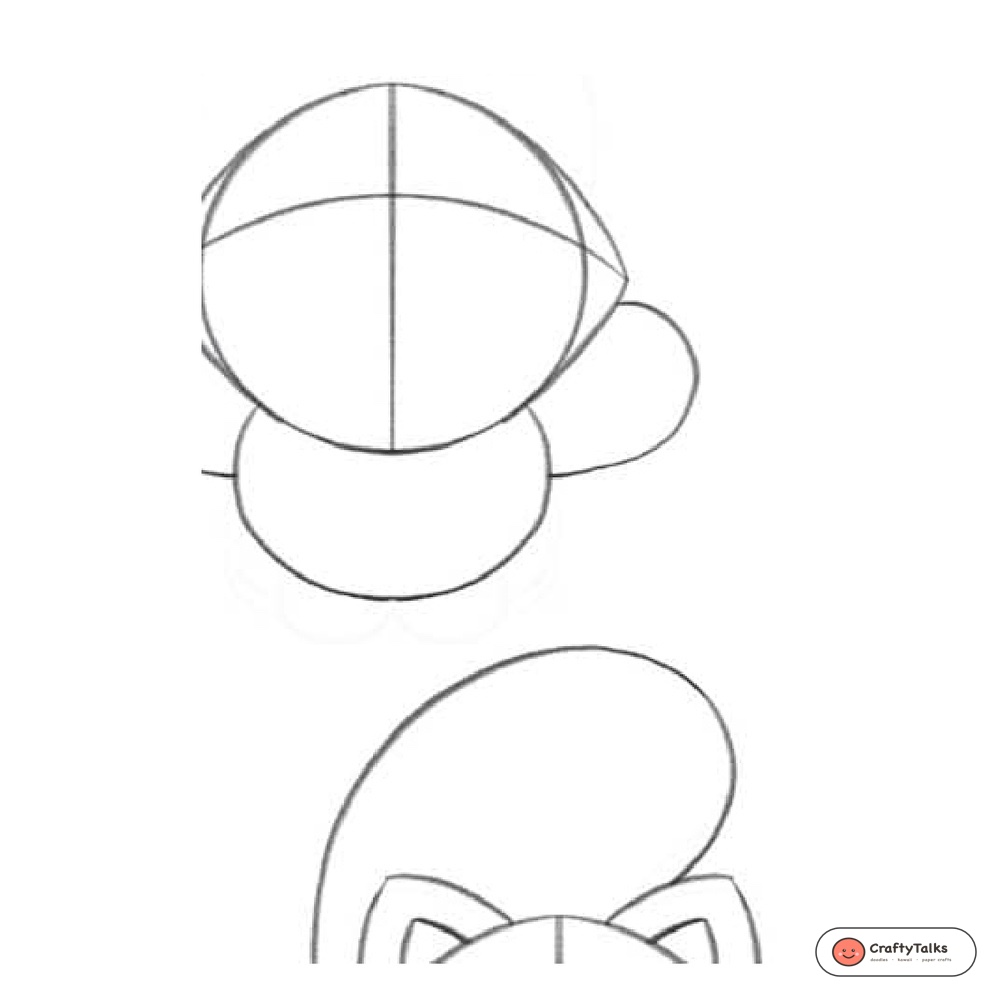
Step 3: Sturdy Forelegs and Thick Tail Armature
Draw two sturdy vertical columns extending downward from the chest to create the front legs. Behind the backline, sketch a large, sweeping banana curve for the tail armature. Red pandas have exceptionally thick, fluffy tails, so give this shape plenty of volume.
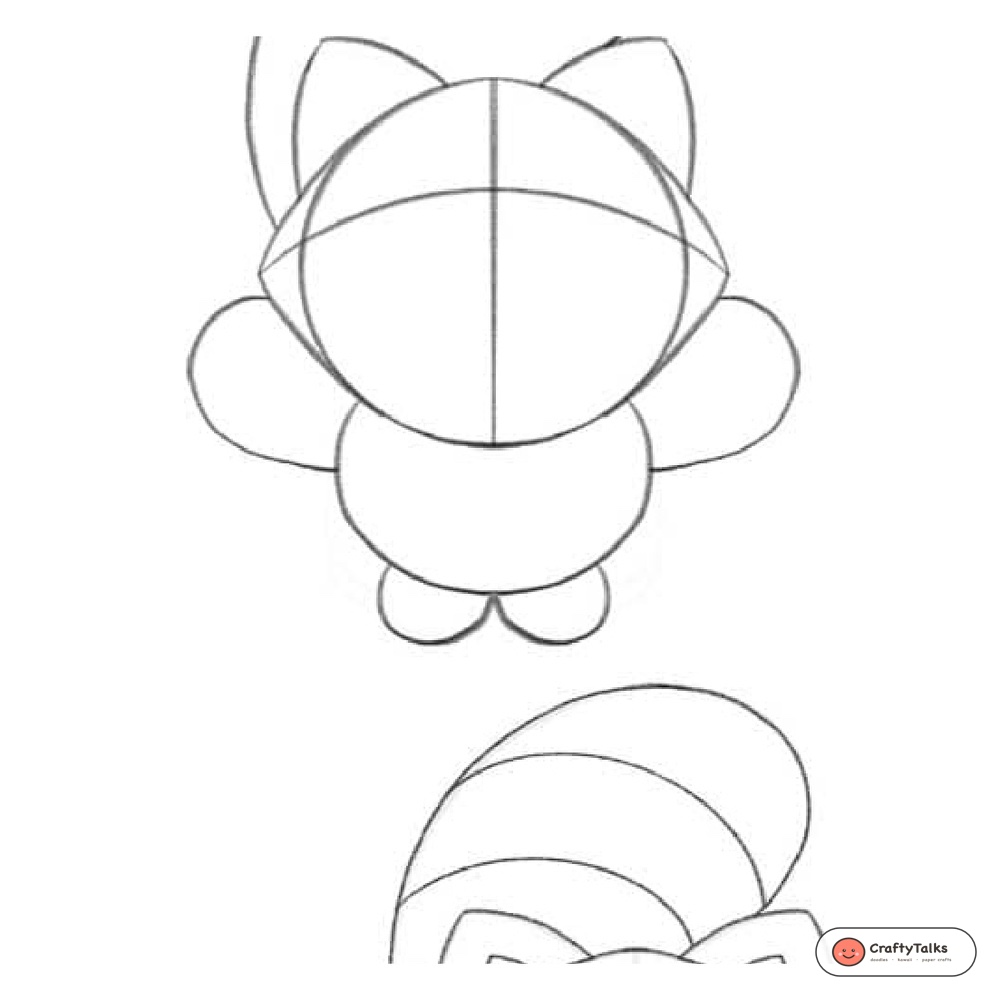
Step 4: Snout Oval and Expressive Eye Contours
Inside the lower half of the head circle, draw a wide, rounded oval for the muzzle. Place a small rounded triangle at the top of this muzzle for the nose, with a tiny smiling mouth underneath. Above the muzzle, draw two circular eyes spaced comfortably apart for a curious, friendly expression.
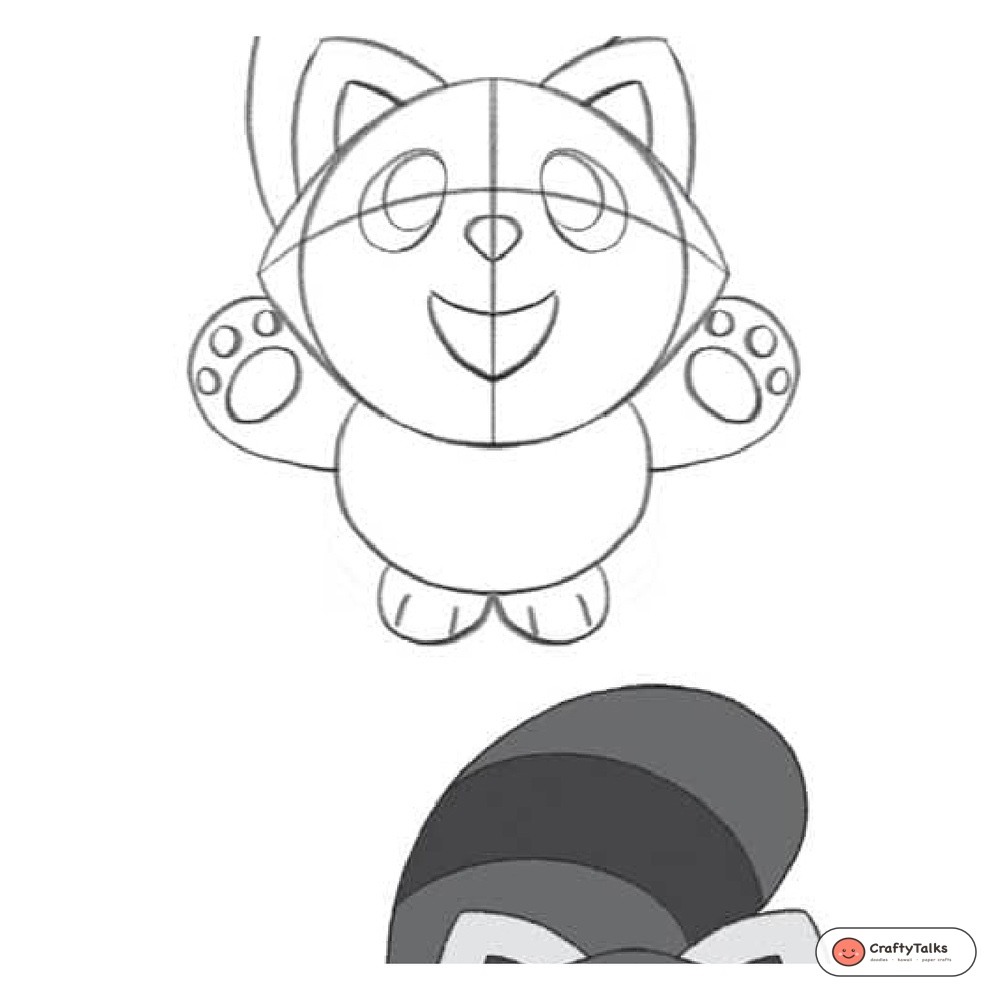
Step 5: Paws, Inner Ear Fluff and Tail Rings
Add rounded toe pads at the bottom of each front paw. Inside each ear, sketch jagged tufts of fur pointing inward. Along the sweeping tail, mark several evenly spaced cross lines to indicate where the dark and light tail rings alternate.
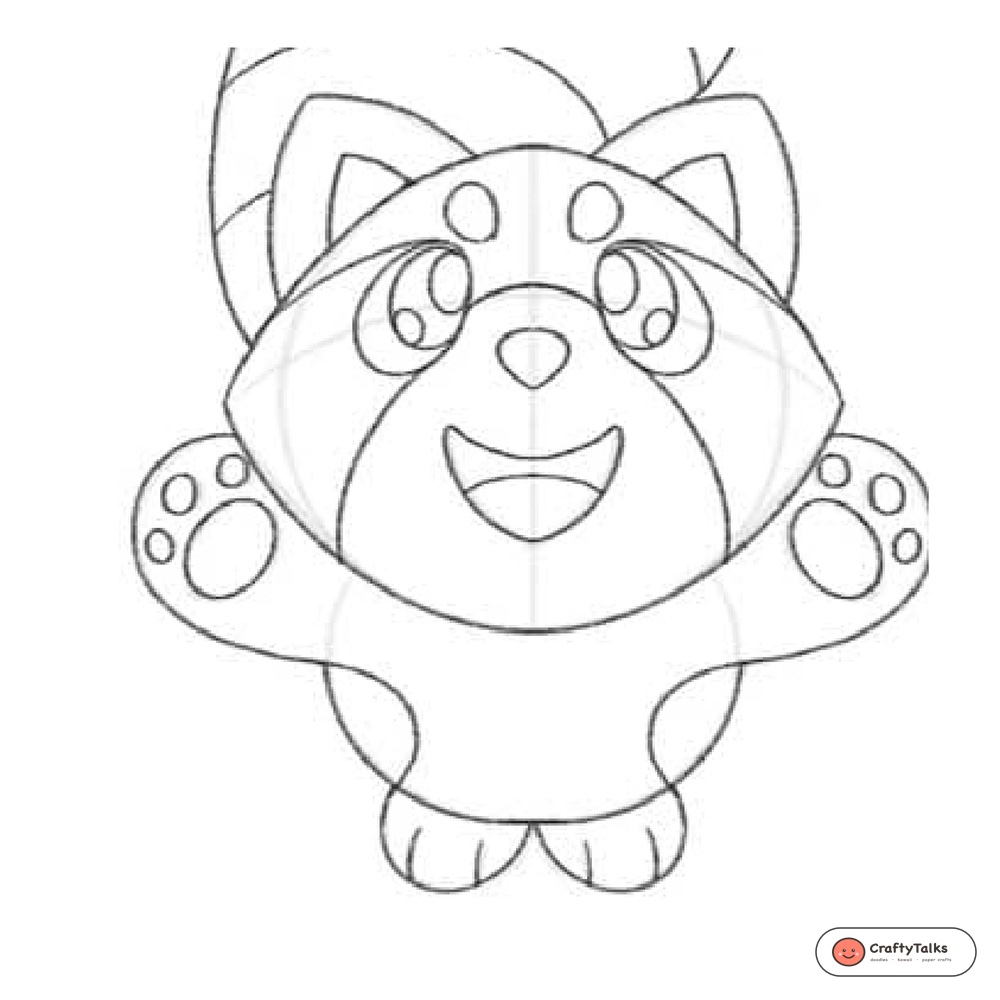
Step 6: Fur Detailing and Clean Inking
Using a fineliner pen, ink your finished outline contours over the construction pencil lines. Add small tufts of cheek fur on both sides of the face, fill in the pupils while leaving small white catchlights, and add light fur texture lines across the forehead and tail. Once your ink dries completely, erase all remaining pencil marks.
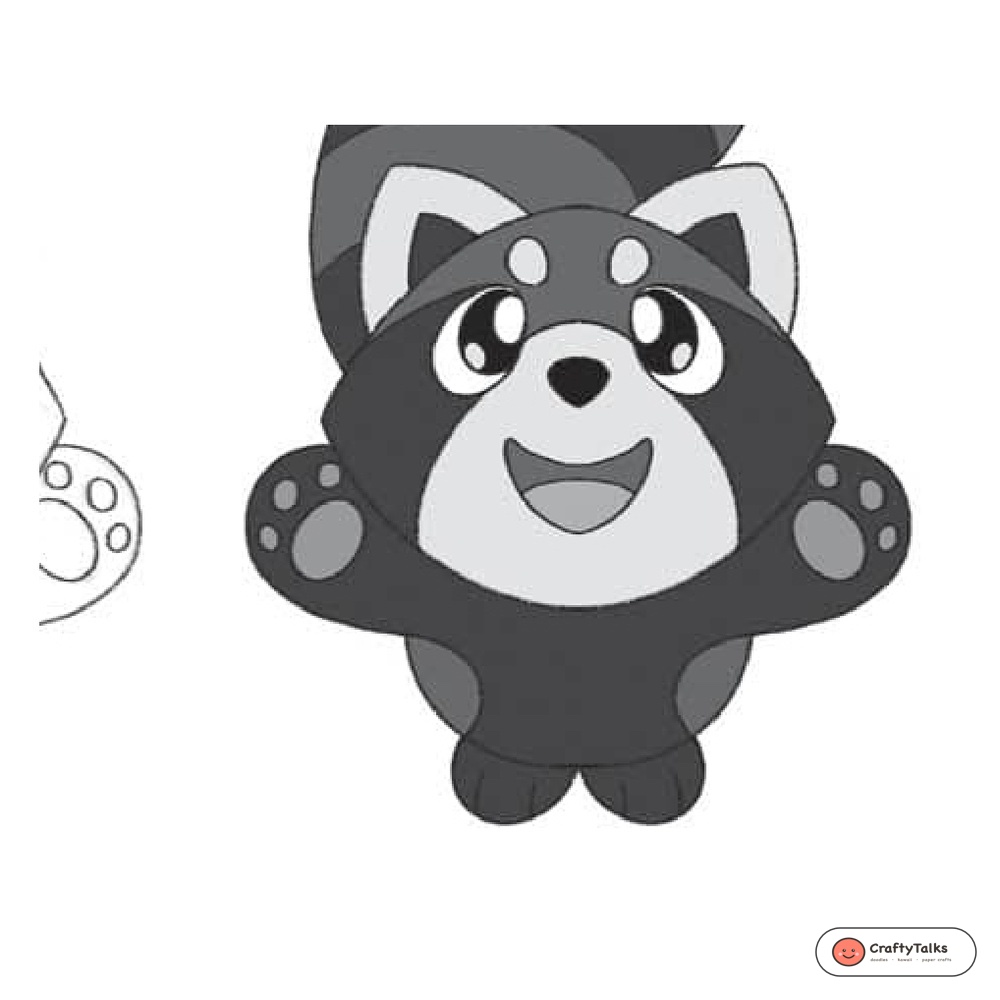
Frequently Asked Questions About Drawing Red Pandas
What makes a red panda drawing look cute?
Placing the eyes low on the head circle and keeping them relatively far apart gives cartoon animals an appealing, baby-like look. Combining that with large, fluffy ears and an oversized bushy tail reinforces the charming proportions.
How many rings does a red panda’s tail have?
In nature, red pandas typically have about 12 alternating dark and light rings along their tails. In a cartoon sketch, five or six distinct bands are usually enough to communicate the ringed pattern clearly without crowding the drawing.
What colors should I use for a red panda?
The upper body and back are a rich reddish-brown or rusty cinnamon color. The belly and all four legs are dark espresso or black. The muzzle, eyebrow spots, and inner ear edges remain clean white or cream.