How to Draw a Gentle Cartoon Giraffe in 6 Simple Steps
Giraffes are an all-time favorite in children’s storybooks and character animation. With their towering grace, iconic spotted coats, and gentle expressions, they instantly command affection and attention. Designing an appealing cartoon giraffe is all about balancing rhythmic silhouette curves with peaceful, expressive personality.
In this step-by-step masterclass, you will learn how to construct a gentle cartoon giraffe from basic geometric gestures—building from a sloping “bean” body and S-curve neck into a fully finished, two-tone colored character illustration. Practice along in your sketchbook or test your pen directly on our Interactive Draw-Along Studio below!
- Difficulty Level: Beginner to Intermediate (Character Design)
- Total Steps: 6 Construction Steps + Color Shading Guide
- Estimated Drawing Time: 20–25 minutes
- Recommended Supplies: HB/2B Pencil, 0.3mm & 0.5mm Fineliners, Warm Yellow & Chestnut Brown Markers
- Character Subject: Gentle African Savanna Giraffe (Giraffa camelopardalis)
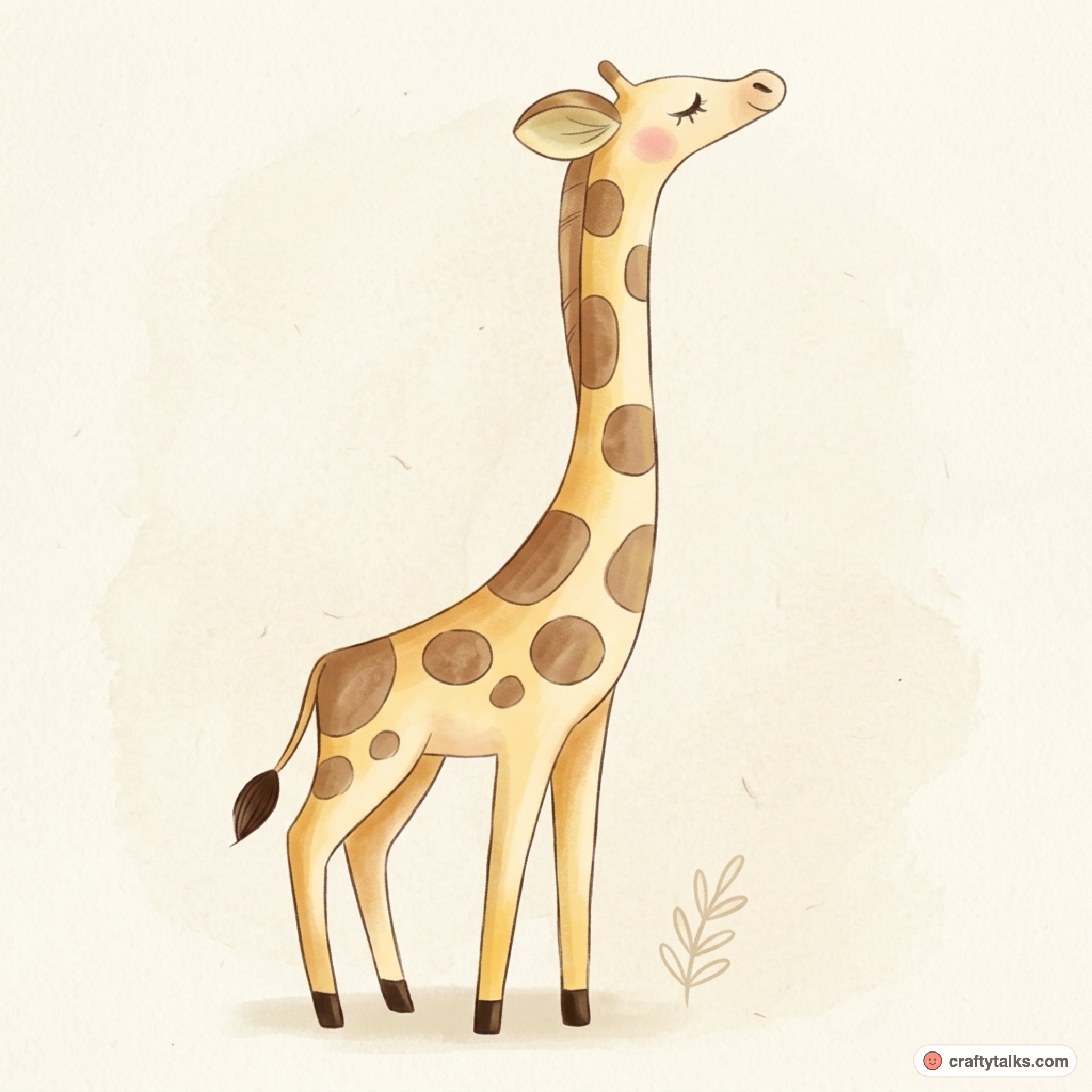
🎨 Interactive Draw-Along Studio: Gentle Cartoon Giraffe
Prefer practicing directly on your tablet, iPad, or computer screen? Draw along using our in-browser Interactive Draw-Along Studio! Toggle traceable reference lines, select curated color swatches, and download your finished artwork:
 Step Guide 🔍
Loading Step...
Loading instructions...


Switch to Another Animal
Pick any animal below to start a new step-by-step draw-along!
Step Guide

🎉 High Five, Artist!
Your custom animal illustration is ready to download and share!

The 3 Silhouette Secrets of Cartoon Giraffes
Before inking your first line, keep these three character anatomy principles in mind so your character looks lively and well-grounded rather than stiff:
1. Sloping Backline
A giraffe’s shoulder blades sit significantly taller than its hips. A downward slope from chest to rump gives that unmistakable authentic silhouette.
2. Gentle S-Curve Neck
Avoid drawing straight vertical pipe lines. A subtle reverse curve adds organic flexibility and conveys relaxed weight distribution.
3. Organic Spot Spacing
Start with larger, rounded polygons on the body and let them graduate to smaller ovals up the neck. Leave breathing space between each patch.
Complete Tutorial Overview
Here is the full 6-step progression from simple gestural armature to the fully inked and shaded cartoon character:
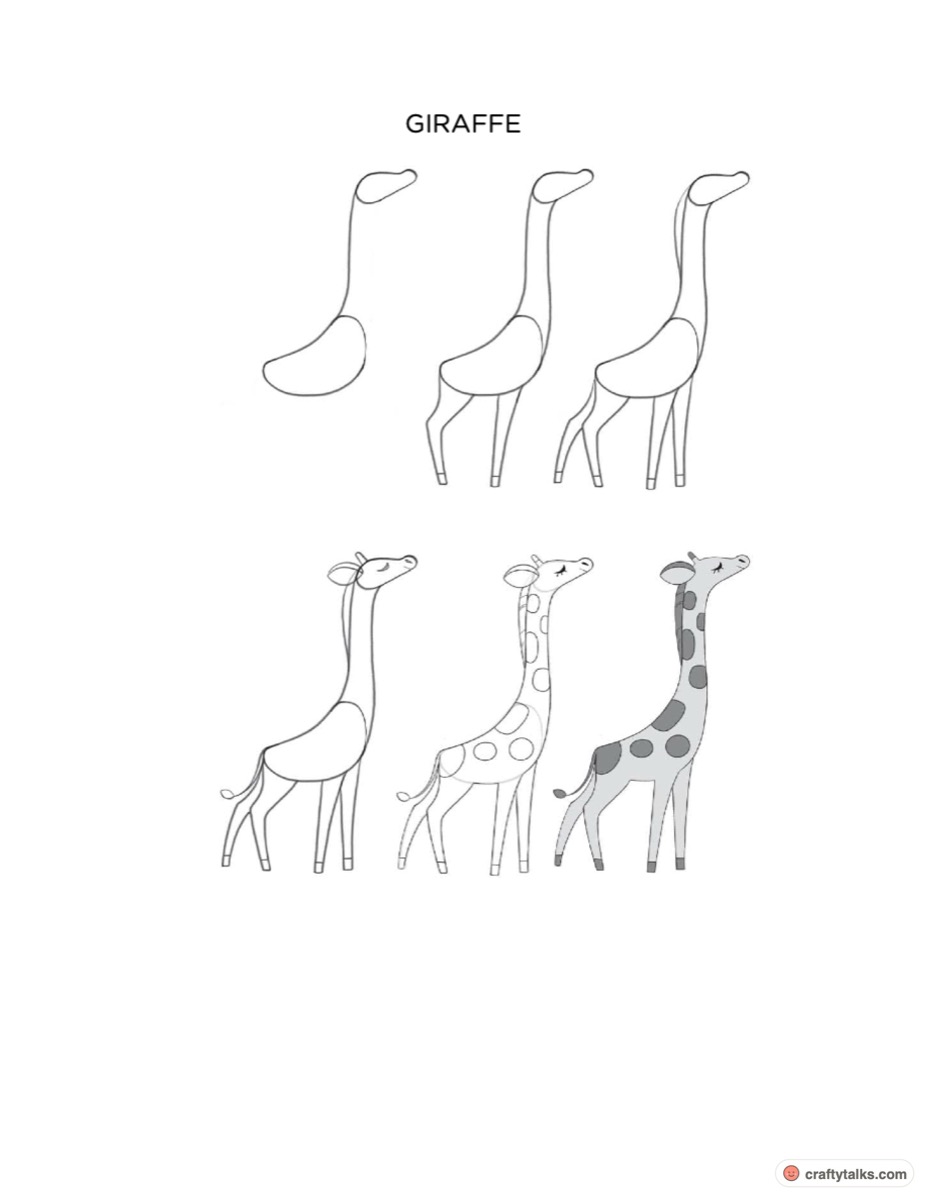
Step-by-Step Cartoon Giraffe Drawing Guide
Step 1: The Bean Body & Curved Neck Rhythm
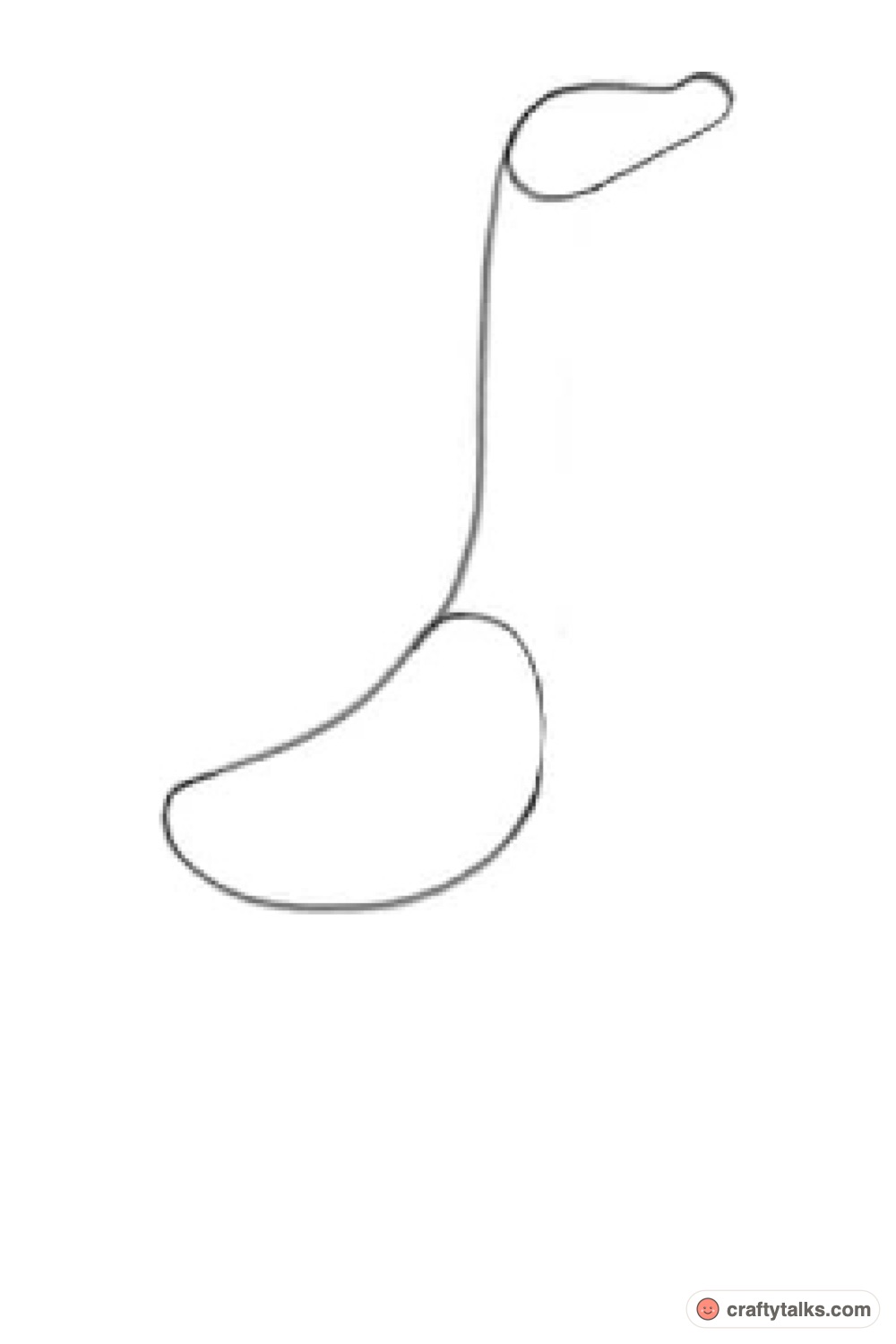
Start with simple, fluid gestures rather than rigid straight lines:
- The Bean Torso: Draw an asymmetric bean shape tilted slightly upward. Notice how the backline slopes downward toward the rump.
- The Neck Gesture: Draw a sweeping S-curved line extending upward from the top shoulder ridge.
- The Muzzle Wedge: Crown the neck with a rounded wedge shape tilted gently upward toward the sky, giving the giraffe a relaxed, dreamy upward gaze.
Step 2: Neck Thickness & Foreleg / Hindleg Pillars
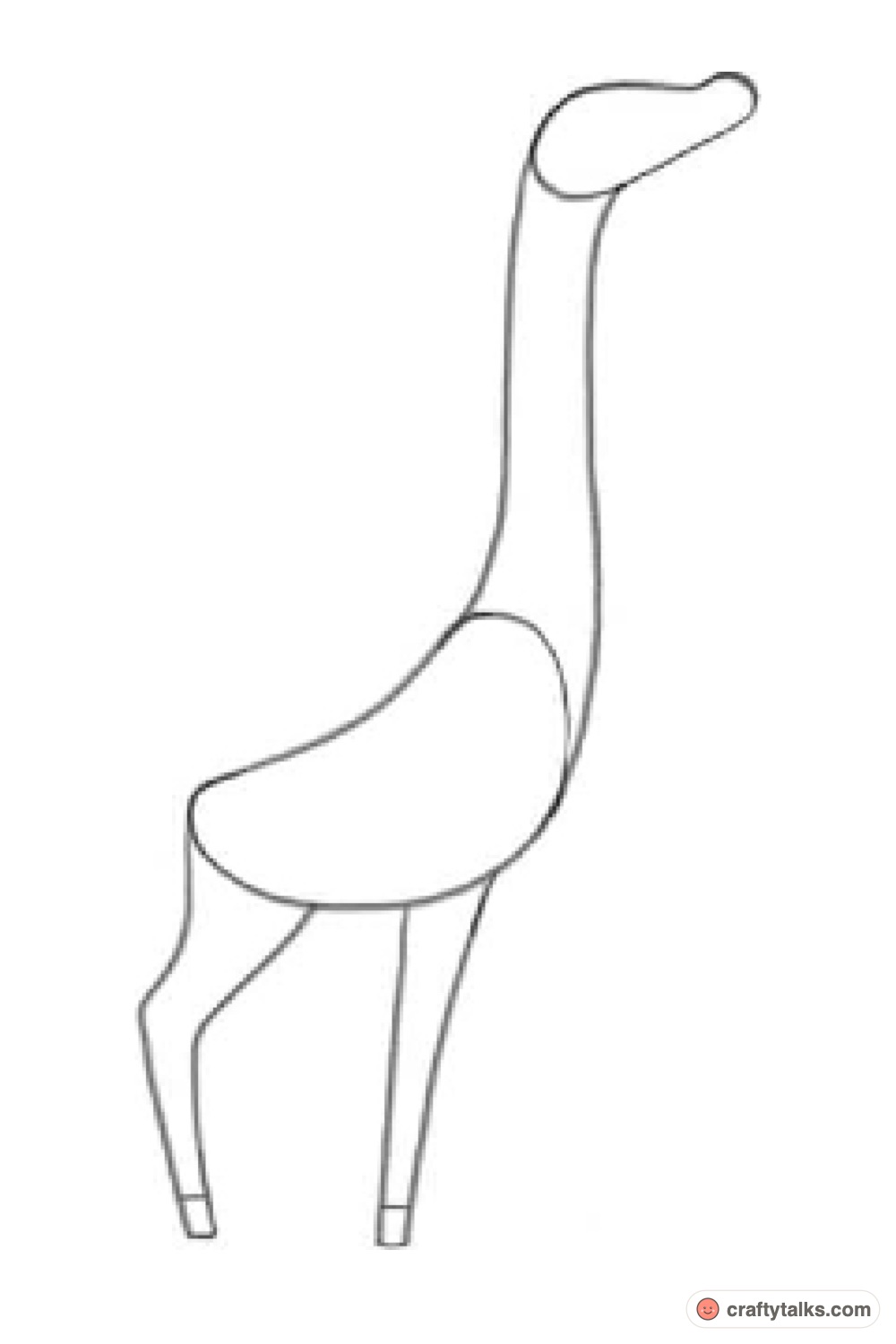
Give the giraffe physical substance and ground its standing stance:
- Tapering the Neck: Draw the front contour of the neck parallel to the back curve. Make it slightly broader at the base where it meets the chest, tapering gently toward the throat.
- Blocking the Foreleg: Drop a straight, slender vertical pillar down from the chest. Giraffe forelegs carry the majority of their weight.
- Blocking the Hindleg: Draw the back leg with a gentle bend at the hock joint before dropping straight down to the hoof.
Step 3: Secondary Legs & Stiff Mane Crest
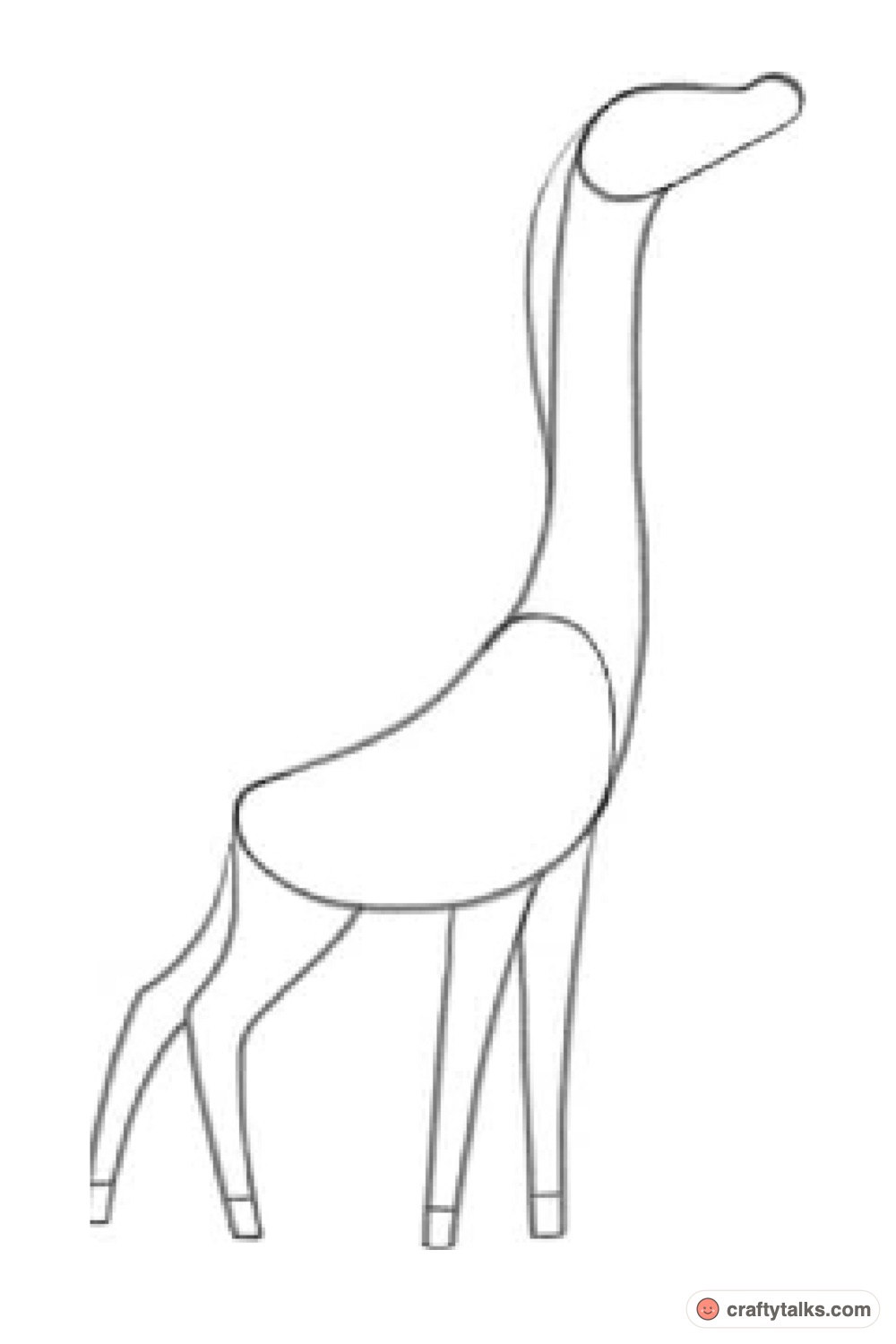
Add depth and species-defining traits by introducing the distal limbs and neck ridge:
- Distal (Far) Legs: Sketch the far front leg and far back leg slightly behind the primary foreground legs. Keep them slightly narrower and terminate a few pixels higher to reinforce three-quarter perspective.
- The Mane Crest: Trace a parallel ribbon along the back of the neck from the nape down to the base of the shoulders. In cartoon style, this creates a clean graphic track for mane notches.
Step 4: Facial Charm, Ears, Ossicones (Horns) & Tail
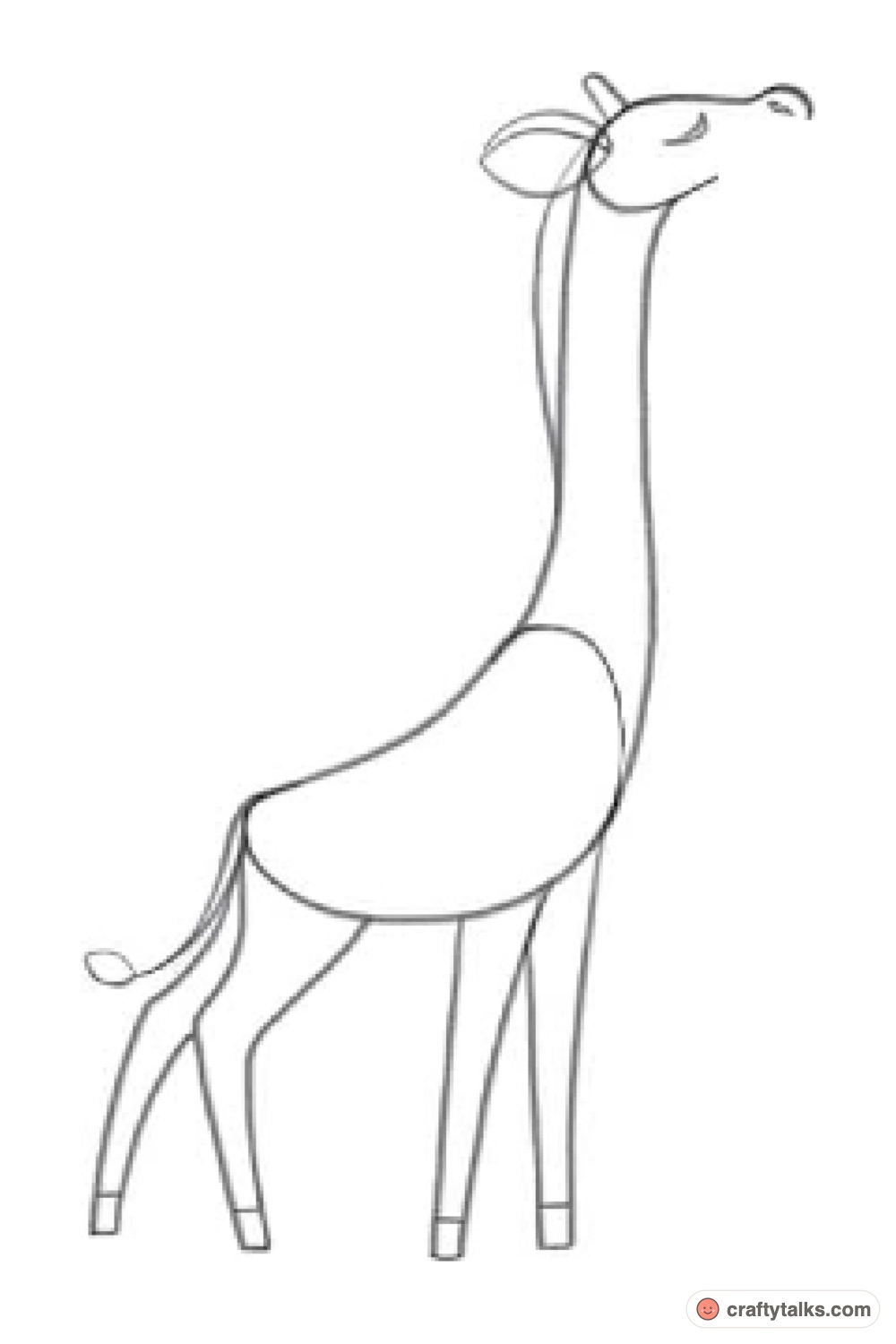
Bring warmth, expressive charm, and personality to your giraffe:
- The Ossicones (Horns): Place two short, blunt knobs tilted gently backwards on the crown of the head.
- Leaf Ears: Draw rounded oval ears fanning outward just below the horns.
- Sleepy, Friendly Expression: Sketch an arched, closed curved eye with two delicate upward lashes. Add a small nostril notch and a contented smile at the tip of the muzzle.
- Tufted Tail: Add a slender tail hanging down past the hocks, ending in a soft teardrop brush tuft.
Step 5: The Organic Spot Pattern Hierarchy
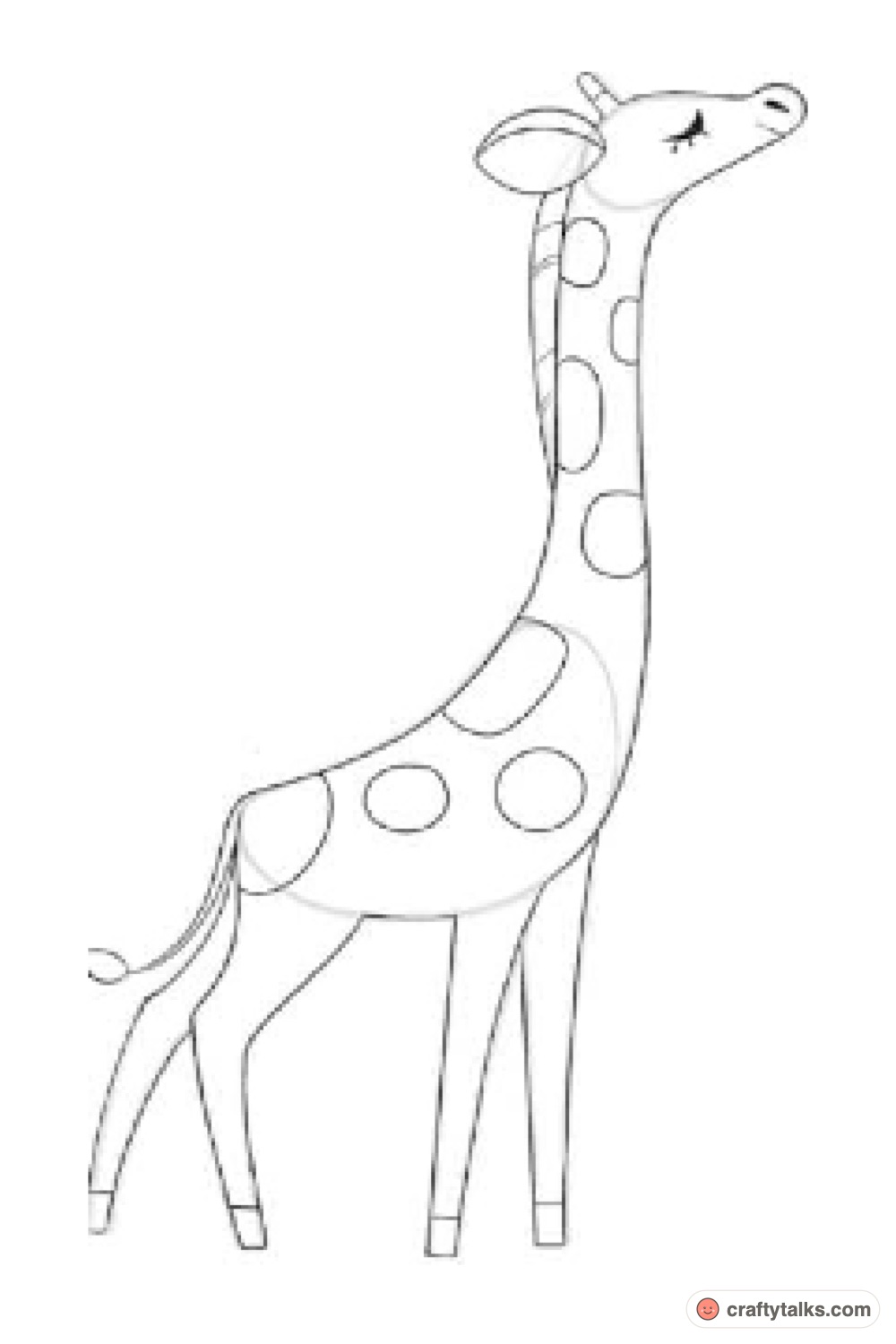
A giraffe’s spot pattern looks best when applied with clear rhythm and restraint:
- Spot Size Hierarchy: Draw 3 to 4 large rounded patches on the body and flank. As you move up the neck, gradually scale them into smaller ovals.
- Breathing Margins: Keep consistent spacing between spots. Do not let them touch each other or crowd outer contour lines.
- Mane Segmenting: Divide the mane ribbon with short horizontal divider lines to give that brisk, stiff-hair texture.
Step 6: Value Tone Shading & Polish
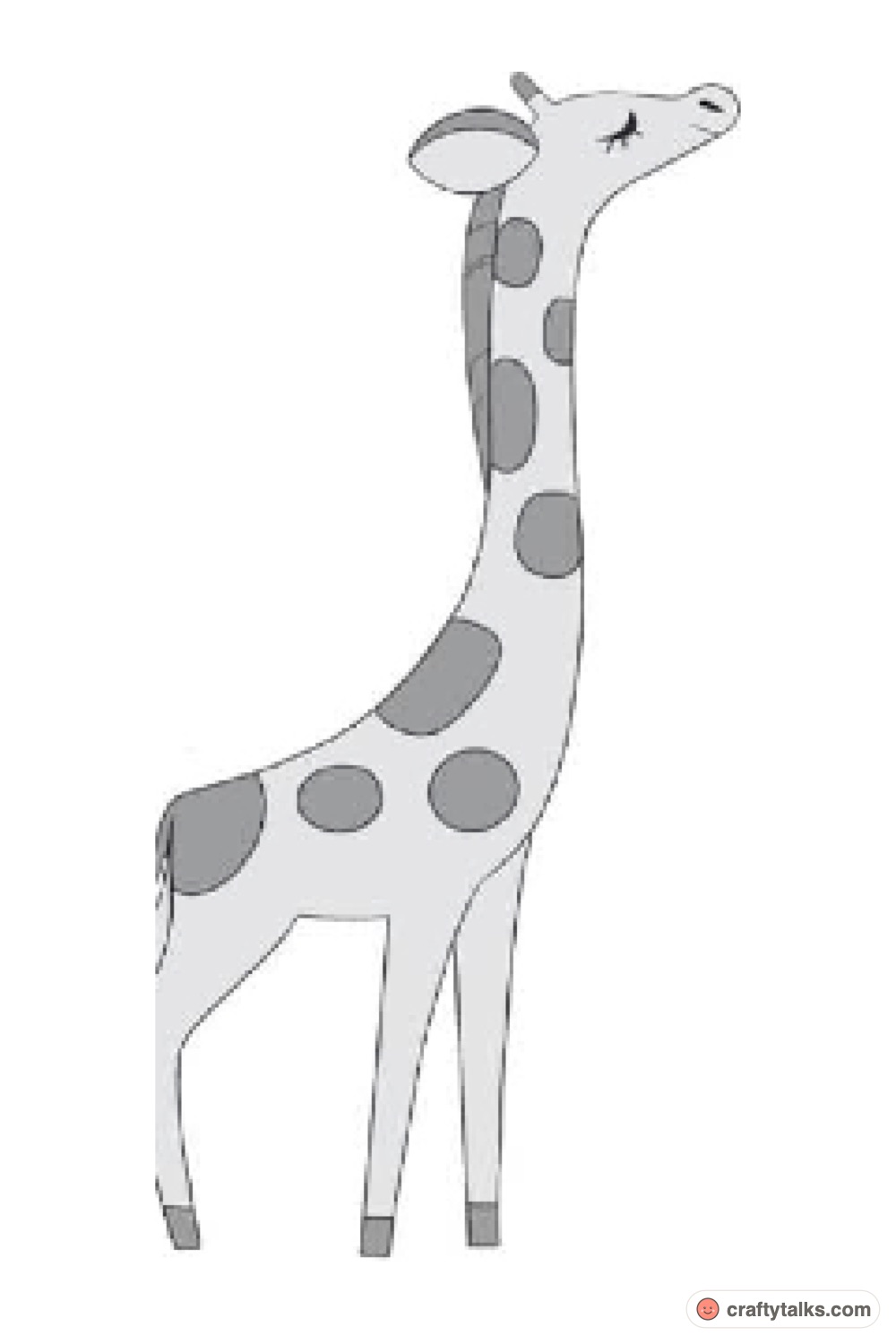
Tie the character together with clean values and contrasting accents:
- Body Base Coat: Fill the entire giraffe’s coat with a soft pale gray or warm pastel cream/yellow.
- Spots & Features: Fill all body spots, the mane ridge, and inner ears with a richer mid-tone (warm chestnut or hazelnut brown).
- Hooves & Tail Accent: Fill the hoof tips and tail brush with dark espresso/charcoal to ground the character firmly on the page.
Character Design Checklist 📋
- ✅ Sloping backline: Shoulders stand distinctly taller than the hips.
- ✅ Curved neck: Graceful S-rhythm avoids the rigid “telephone pole” look.
- ✅ Peaceful posture: Head tilted gently upward with serene closed eye.
- ✅ Distinctive ossicones: Short rounded horns and leaf-shaped ears.
- ✅ Spot hierarchy: Large spots on body, smaller spots tapering up the neck.
- ✅ Grounded stance: Foreleg straight beneath chest; hindleg angled with hock bend.
Frequently Asked Questions
What is the difference between giraffes’ horns and antlers?
Giraffe horns are called ossicones. They are permanent, skin-covered bony protrusions rather than shedding antlers, and are typically crowned with short dark hair tufts.
What colors work best for cartoon giraffes?
A warm pastel cream (#FFFBEB) or buttery yellow (#FEF08A) base coat paired with a rich caramel or hazelnut brown (#92400E) gives a friendly storybook vibe. For hooves and tail, use dark espresso (#451A03).
Explore More Animal Drawing Masterclasses!
Ready for your next sketchbook challenge? Dive into our complete collection of cute and character animal drawing tutorials: